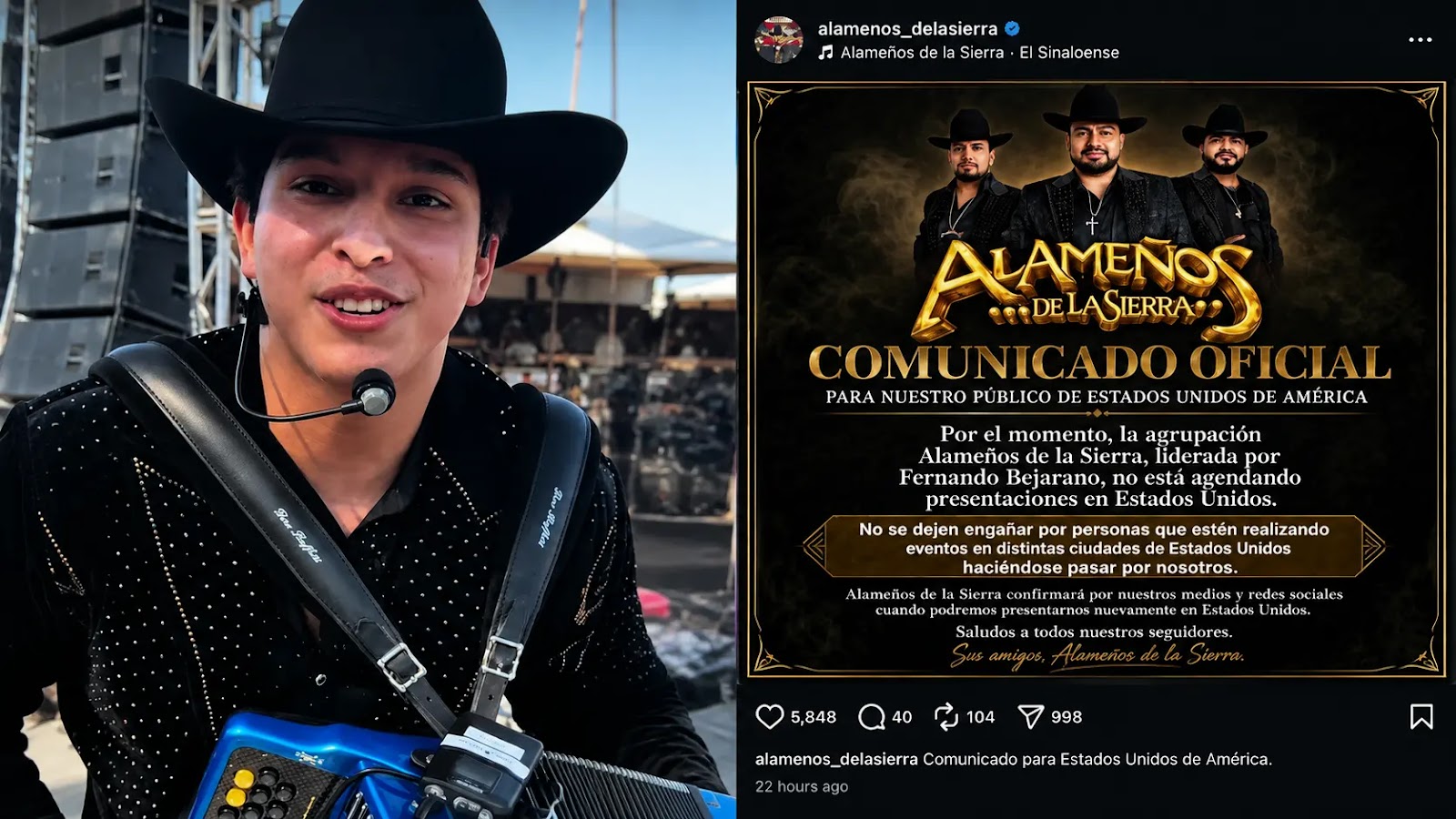
When two groups carry nearly the same name, ticket buyers are the ones left guessing who they actually paid to see.
A Santa Barbara Show Turns Into an Alameños de la Sierra Identity Crisis
A regional Mexican show in Santa Barbara has turned into a case of mistaken identity, and some fans are asking for their money back. An event was marketed around Los Alameños de la Sierra, a name that carries real weight in the norteño and sierreño world. But when the crowd looked up at the stage, a lot of them did not recognize the musicians performing, and the confusion only grew from there. What should have been a straightforward night of music became a lesson in just how messy band names can get.
The Real Group Speaks Up
The plot thickened when a group using the Alameños de la Sierra name posted online to say they were not performing in the United States at all right now. Their message was blunt: do not let the lies fool you, we are not over there. That left fans with an obvious question. If the group they thought they were seeing was not in the country, then who exactly was on that Santa Barbara stage? The answer points to the uncomfortable reality that more than one act is operating under a nearly identical name.
Why Two Groups Share One Name
This is not as rare as it sounds. Regional Mexican music has a long history of groups splitting, feuding, and ending up with two separate acts claiming the same or a very similar name. Lineups change, founders and members part ways, and suddenly there are two versions of a beloved group touring different circuits, each insisting it is the authentic one. For fans, it can be genuinely hard to tell which act is which, especially when promoters lean on a famous name to sell tickets without spelling out exactly who is booked.
The Refund Fight
That is where the anger comes in. Some attendees are calling it false advertising and demanding refunds, arguing they bought tickets expecting one group and got another. It is a fair frustration, though it can be a tricky thing to act on, because when two acts legally share a name, the marketing can technically be accurate while still misleading fans who assumed they were getting the more famous version. The gap between what is technically true and what fans reasonably expected is exactly where these disputes live.
A Resolution May Be Coming
None of this is really the fans' fault, and it is not always easy to pin on the musicians who showed up to play either. The people caught in the worst position are the ticket buyers, who did their part by paying and showing up, only to feel shortchanged by a name game they had no way of refereeing from the outside. There may finally be some resolution on the horizon. Word going around is that the situation could head toward a formal decision about who gets to keep the name and who has to rebrand, which would spare future crowds this exact headache. Until then, the takeaway for fans is a practical one. Before buying tickets to a group with a contested name, it is worth checking the act's official pages to confirm who is actually booked. In a genre this hot, where roughly a 60 percent jump in regional Mexican streams in 2023 per Luminate has made these names more valuable than ever, the incentive to cash in on a familiar brand is only going to grow.
Credits & Sources
- Via TikTok: 44vatoX